
ABOUT IAFSM
BUILT AROUND MEASUREMENT. UNITED BY TRUTH.
The International Association of Forensic & Security Metrology brings together professionals who use precision measurement to document, analyze, interpret, and communicate evidence.
Our members and leaders represent the diverse disciplines that shape forensic and security metrology—from law enforcement and forensic science to engineering, reconstruction, research, academia, and technology.
OUR MARK
The crosshair represents focus, accuracy and investigation. The 3D point cloud symbolizes spatial data, measurement and the pursuit of truth. The global grid reflects our international community united by science, technology and justice.

PRECISION MEASUREMENT
IN THE SERVICE OF JUSTICE.
SHARING KNOWLEDGE. FINDING THE TRUTH.
Our mission is to promote the development and use of precision measurement systems, techniques and software in the generation of two- or three-dimensional coordinate spatial data for documentation, planning, analysis and/or presentation purposes in the service of justice.
ADVANCE
THE SCIENCE
Support objective research, evaluation, standards, methods, and scientifically sound practices.
ADVANCE
THE PRACTICE
Promote education, professional development, certification, and the exchange of knowledge.
CONNECT
THE FIELD
Bring together practitioners, government, academia, professional associations, researchers, the judiciary, and technology developers.
LED BY THE PROFESSION
IAFSM is governed by professionals who bring experience from across the forensic measurement community.
EXECUTIVE LEADERSHIP

Mike Russ
Sheriff's Supervising Crime Scene Specialist
President
San Bernardino, CA, USA

William Henningsen
Vice President
Omaha Police Crime Laboratory
Nebraska, USA

Treasurer
Ken Jones
Ret. Criminalist Portland Police Bureau
Training & Support Specialist
Leica Geosystems a Hexagon Company
Oregon, USA

Dave Foster
Secretary
MD RIEGL UK and Technical Lead RIEGL Public Safety & Forensic Investigations
Yorkshire, United Kingdom

Cody Allen
Texas Ranger
Texas Department of Public Safety
Director
Texas, USA
BOARD OF DIRECTORS

David Cacioppo
Director
Police Officer
Park Ridge Police Department
Illinois, USA

Operational Media Specialist - Forensics
Technical Design & Documentation Program, FBI Laboratory
Erin Casey
Director
Virginia, USA
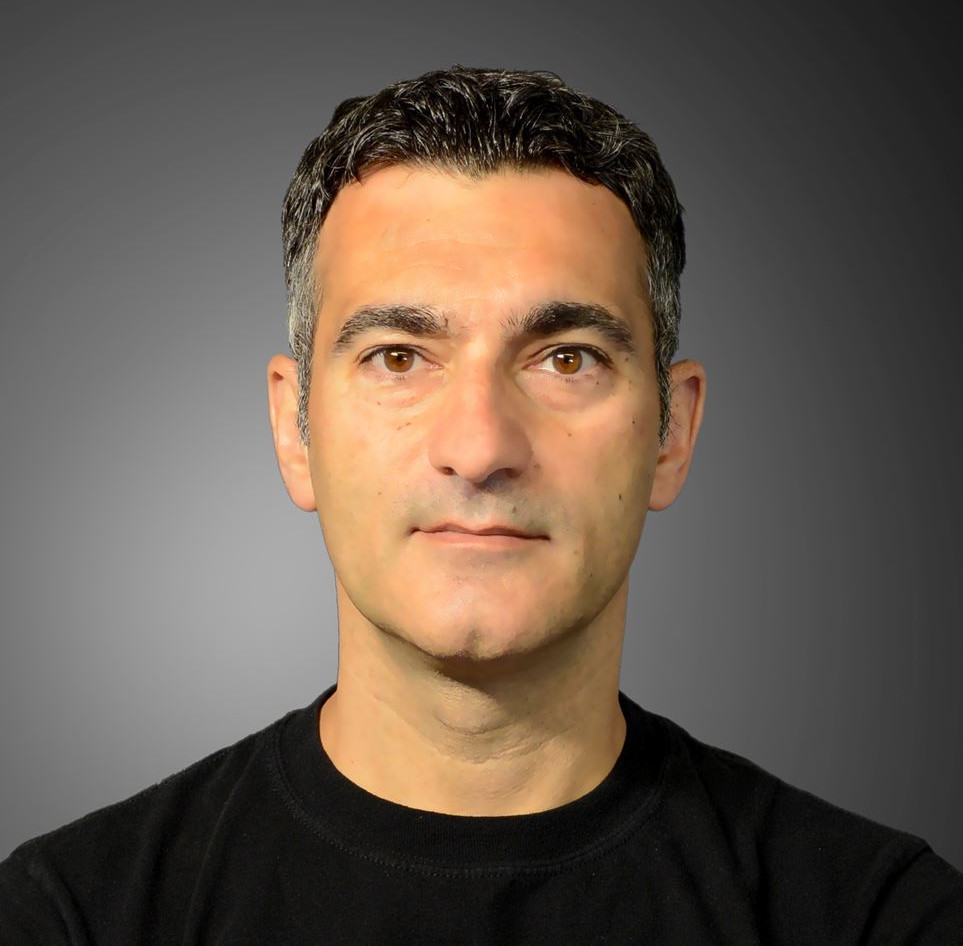
Eugene Liscio
Director
3D Forensic Analyst
ai2-3D
Toronto, Canada
REGIONAL REPRESENTATIVES

Crime Scene Officer (Reconstruction Spc)
Forensic Evidence and Technical Services Command, New South Wales Police Force
Laura Jayne-Dinaro
Asian/Pacific Representative
Australia

Marcus Rowe
European Representative
Business Director
Public Safety and Forensics
Leica Geosystems
United Kingdom
SCIENCE. OBJECTIVITY. INTEGRITY.
IAFSM is committed to advancing forensic and security metrology through scientifically sound, objective, and transparent practices. Reliable measurement requires more than advanced technology—it requires an understanding of the methods used, the limitations of those methods, and the factors that may influence the accuracy and interpretation of results.
IAFSM promotes practices grounded in the scientific method, including appropriate consideration of measurement error and uncertainty, validation, peer review, reproducibility, and the use of accepted scientific principles. Findings should be supported by the available evidence, accurately represented, and communicated in a manner that clearly distinguishes measured results from interpretation.
Through education, collaboration, research, standards development, and the exchange of professional knowledge, IAFSM encourages the continual evaluation and improvement of forensic measurement practices as technologies and methodologies evolve.